
Why read about micro-surgery of the voice box?
Read about micro-surgery of the voice box if you or someone close to you is considering surgery for a problem with the voice box, and you want more information. Or out of interest.
What is micro-surgery of the voice box?
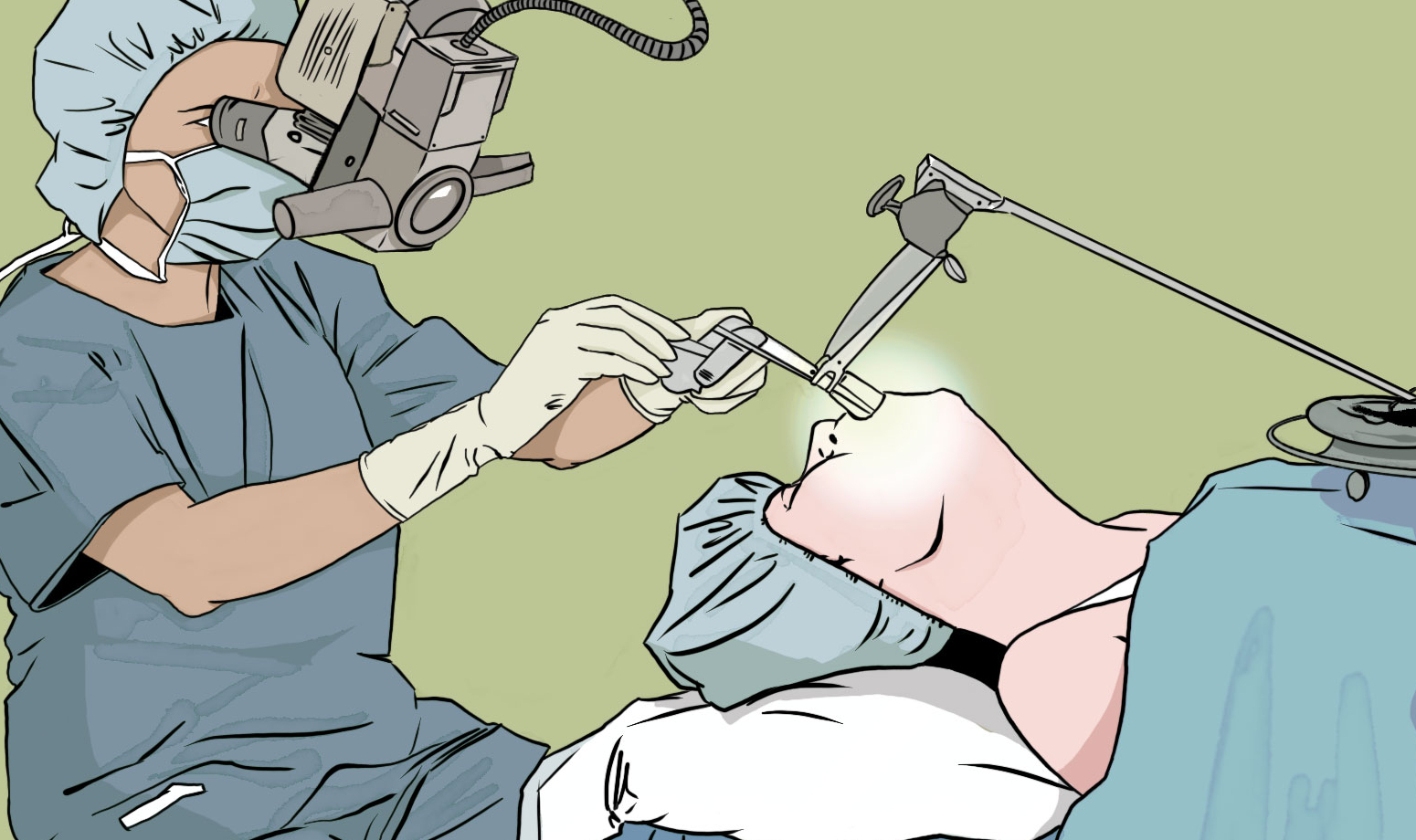
Micro-surgery of the voice box, sometimes referred to as microlaryngeal surgery, involves surgery on the voice box under general anesthesia (fully asleep) using a surgical microscope or endoscope to get a magnified and detailed view of the voice box.
Why do I need the operation?
You may need micro-surgery of the voice box to diagnose or treat a voice box lesion when this cannot be achieved in the outpatient clinic. Common reasons include:
- Removing abnormal tissue. Abnormal tissue can be sampled to make a diagnosis. This is known as a biopsy. Abnormal tissue can also be completely removed. This is referred to as excision.
- To improve a voice problem.
- To improve a breathing problem.
- To inject the voice box, for example to bulk up a paralysed vocal fold.
- Sometimes to just examine the voice box if this is difficult in the outpatient clinic.
What happens during micro-surgery of the voice box?
The surgery takes place with you fully asleep under general anaesthesia. The anaesthetist passes a breathing tube through through your mouth into your windpipe to control your breathing.
The surgeon then passes a special metal tube known as a laryngoscope through your mouth down into the voice box, as shown in the picture. A microscope or an endoscope is used to get a magnified view of the voice box.
Special instruments are used to operate on your voice box. These instruments may include devices such as a laser, a radiofrequency device, or a micro-debrider.
After the operation you can usually go home the same day, or the next day.

A patient undergoing micro-surgery of the voice box
Picture credit: https://www.entuk.org/patients/conditions/51/microlaryngoscopy_an_operation_on_your_voicebox
What are the risks of micro-surgery of the voice box?
General anaesthetic
Having a general anesthetic is usually very safe. However in rare situations, life-threatening complications related to anesthesia can occur. It is important to let the doctor know about your medical conditions, medications, and any medication allergies. The doctor may recommend a pre-operative blood test and electrocardiogram (ECG) to assess your risk level for anesthesia.
Damage to teeth, lips and soft tissues of mouth and throat
The front teeth can sometimes become chipped or loosened, and bruising or cuts to the lips and soft tissues of the mouth can occur as a result of passing the laryngoscope, a metal tube, through the mouth. Great care is taken to avoid injury, and a tooth guard is used to protect the teeth and gums. Certain configurations of teeth and jaw increase the risk of injury, and your surgeon will discuss this with you. If you have loose teeth or crowns, please inform your surgeon.
Laser airway fire
This is a potentially life-threatening but fortunately extremely rare complication that can occur when a laser is used to operate on the voice box. The complication is caused by breathing gases catching fire, and is prevented by using non-flammable gases and controlling the oxygen level in the breathing gases. A host of other precautions are taken to avoid unwanted burns due to the laser. The laser is a very effective and safe tool when used by a surgeon experienced in the techniques.
Bleeding
Severe bleeding is unlikely unless very extensive micro-surgery of the voice box is performed. Do not be alarmed if you notice some blood in your saliva after an operation on the voice box. This is relatively common and usually settles within 24 hours. Please inform the doctor well before surgery if you are are taking blood thinning medication.
Throat pain
It is common to experience some throat pain after micro-surgery of the voice box. However this is usually not severe. Simple pain killers can be taken if needed and the pain or discomfort usually settles within a day or two.
Stiff neck
Some patients may experience slight neck stiffness after micro-surgery of the voice box. If this happens, painkillers, gentle neck exercises, or neck massage may help. If you have a history of neck problems, please inform the surgeon before your operation.
Tongue numbness and weakness
It is common to experience some tongue numbness after micro-surgery of the voice box, which usually settles after a day or two. Weakness of the tongue due to stretching or pressure on the nerve to the tongue muscle is rare but can happen in certain situations. This rare complication may cause temporary difficulty articulating words clearly. You can expect this to recover, but it may take a few weeks or months.
Hoarseness
Be prepared for your voice to be hoarse, even if surgery has been performed to improve the voice. The degree and duration of hoarseness will vary according to the type of operation performed, and it is important to discuss the expectations with your surgeon before the operation.
As an example, a simple biopsy may make the voice worse for a few days until the lining of the voice box heals. Whereas extensive removal of abnormal tissue could make the voice hoarse for several weeks, or even months.
Persistent hoarseness can also occur if abnormal scarring takes place in the voice box after surgery. It is important to follow the post-operative instructions to ensure that healing is as good as possible. Read more about these instructions in the section below titled “Things to do after surgery”.
Swallowing difficulty
Typically you can eat and drink normally after the operation once you are fully awake from the general anaesthetic on the same day.
In certain situations, surgery on the voice box can increase the risk of food or drink entering the windpipe. This is known as aspiration and can lead to chest infection. Operations making this more likely include removal of structures at the back of the voice box, and more extensive tissue removal. Your surgeon will discuss the likelihood of this risk with you ahead of the operation.
If the risk of aspiration is considered high, swallowing evaluation may be performed with a swallowing therapist before commencing eating and drinking. Sometimes dietary modifications are used to reduce risk of aspiration. Rarely, temporary feeding through a tube passed from the nose to stomach (nasogastric tube) is needed while waiting for healing to occur.
The risk of swallowing difficulty is low and only applies in specific situations.
Breathing difficulty
If you have had a lot of work done on the voice box, especially laser treatment, there is a small risk of swelling of the voice box lining, which can cause breathing difficulty. Your surgeon will be able to tell if you are at risk of this happening. If you are, you would very likely be kept overnight in hospital as a precaution.
Some patients may need treatment with steroids. Rarely, the patient is kept in intensive care, with the breathing tube in, while waiting for the swelling to subside. Even more rarely, a patient needs a breathing tube in the neck known as a tracheostomy tube to bypass a blocked breathing passage.
Are there alternatives to micro-surgery of the voice box?
Some conditions do not need to be treated with surgery, particularly if the condition affects the quality of life rather than being dangerous or life-threatening. Non surgical treatments include voice rest, medications, and speech therapy. Your doctor will discuss the options with you. If conservative treatment does not work well enough, microlaryngeal surgery may be needed.
If a simple biopsy is all that is needed, this can sometimes be achieved in the outpatient clinic using a flexible endoscope passed through the nose to the voice box. Biopsies are taken with flexible instruments passed through narrow channel in the endoscope. The biopsy instruments are tiny and biopsies are small. Several biopsies may be needed to get enough tissue to make a diagnosis. The advantages of this technique are that general anesthesia can be avoided (which is particularly good for unfit patients), and the food passage can be screened at the same time with the same endoscope (read more about transnasal esophagoscopy).
Things to do after micro-surgery of the voice box
There are a few steps to be taken after surgery to get the best results for your voice.
Voice rest
Voice rest means no talking, no whispering, no throat clearing (ahem!), and avoid coughing! Your surgeon may recommend several days to up to two weeks of voice rest, and will advise you depending on the type of surgery that is being performed. Do you best to comply with the instruction and allow time for healing to take place. Get a pen and paper for communication! If you use your voice professionally, you may need to work with a speech therapist when you start using your voice again after surgery, to ensure that your voicing technique is correct, and minimise risk of re-injuring the vocal folds.
Hydrate well
Drink plenty of water to hydrate your throat. Generally, the average person should drink about 3 litres of fluid per day. That works out at about 12-13 cups. A good gauge for whether you are drinking enough is if your pee is pale and odourless! Drinking not only lubricates the surface of the voice box, but also ensures there is enough fluid within the vocal fold tissue which makes the vocal folds vibrate more efficiency and can reduce risk of injury during vibration. The best fluid to drink is water which can be hot, warm or cold.
Prevent acid reflux
Acid reflux refers to acid and digestive juices from the stomach coming back up the food passage to the voice box. This can cause injury and sets back the healing process. Reducing acid reflux may mean making some lifestyle changes, and there are three good rules of thumb to follow:
(1) The 70% rule. When you eat, try not to fill yourself up till you are full. Instead, stop eating and drinking when you are 70% full. You may need some time to get used to this.
(2) The 3-hour rule. No food or drink three hours before sleep. This allows more time for your stomach to empty, which reduces the likelihood of acid reflux when you lie down to sleep.
(3) Avoid “heaty” foods! These include food like peanuts, and deep fried and spicy food. They are generally slow to digest, which means that digestive juices are around longer, increasing the possibility of reflux.
Avoid tobacco smoke
Thus means not smoking, and avoiding second hand tobacco smoke!
Medications
After surgery, medication may be prescribed to help healing. These medications include anti-reflux medication, and sometimes antibiotics and or steroids in selected situations. You should continue your normal medication, although do let your doctor know what they are, as some medications add to throat discomfort.
What else do I need to know about micro-surgery of the voice box?
Every effort has been made to ensure the accuracy of the information here. Nonetheless, do discuss it in the clinic and ask any questions you may have before acting upon it.
Read more about services for voice problems in our section on Services, and in our Blog section on Throat • Voice • Swallowing.