
What this is about.
This page is for patients to read more about what nasal polyps are and how biologics have revolutionised the treatment of this medical condition.
What are nasal polyps?
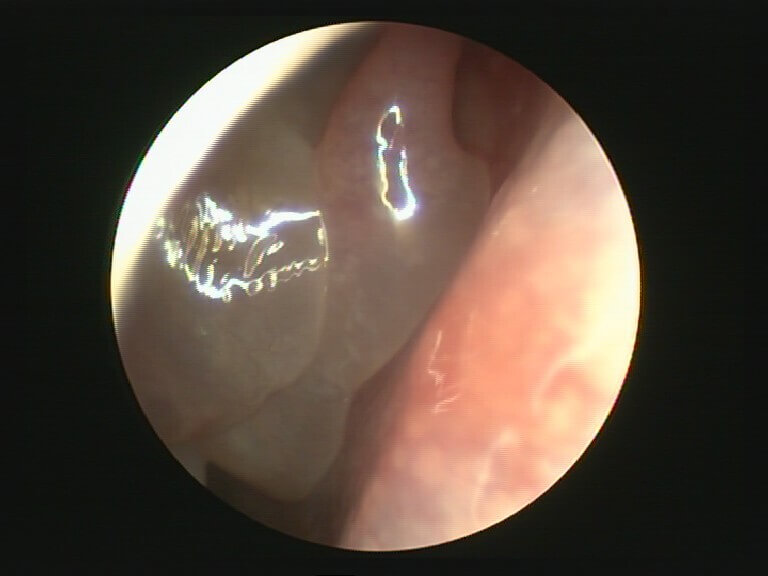
Nasal polyps are sac-like growths in the lining of the nose and sinuses. They usually form because of inflammation and are painless and non-cancerous. However, nasal polyps can cause breathing difficulties, reduced sense of smell, and frequent sinus infections.

Traditionally, treatment options have included steroid nasal sprays, steroid tablets, and for more severe cases, surgery. However, these treatments often offer only temporary relief, leading to a recurring cycle of symptoms.
What are biologics?
Biologics represent a groundbreaking advancement in the treatment of nasal polyps. They are a group of medications produced and purified from living organisms. In the context of nasal polyps, biologics are monoclonal antibodies, which are proteins derived from white blood cells. They target specific components of the immune system that contribute to inflammation, a key factor in the development of nasal polyps.
How do biologics work to treat nasal polyps
Biologics for nasal polyps work by targeting specific proteins in the immune system that drive inflammation. The target proteins in nasal polyps are usually interleukins. By inhibiting interleukins, biologics reduce inflammation and prevent the growth of polyps.
Different biologics may target different interleukins. For example, the biologic mepolizumab specifically targets interleukin-5 (IL-5), whereas another biologic, dupilumab, specifically targets interleukin-4 (IL-4) and interleukin-13 (IL-13).
These interleukins play a central role in an inflammatory pathway known as type 2 inflammation, which is a common cause of nasal polyps. Hence, blocking these components of the inflammatory pathway reduces the size of polyps, improves nasal airflow, and restores the sense of smell.

What do biologics add to current treatment for nasal polyps?
- Less need for steroids: Unlike corticosteroids, which affect the entire immune system, biologics target specific steps in the pathways involved in the formation of nasal polyps. Hence, the treatment is more precise or targeted, reducing the risk of side effects and enhancing treatment efficacy.
- Long-Term Relief: Clinical studies have shown that biologics provide longer-lasting relief compared to traditional treatments. In other words, patients experience significant improvement in nasal obstruction, sinus pressure, and sense of smell over extended periods.
- Reduced Need for Surgery: By effectively shrinking polyps and controlling symptoms, biologics reduce the need for surgical intervention. This is particularly beneficial for patients who have undergone multiple surgeries with only temporary relief.
- Improvement in Quality of Life: Patients treated with biologics report substantial improvement in their overall quality of life. This includes better sleep, improved ability to breathe, and restoration of the sense of smell, which is often diminished by nasal polyps.
- Improvement in co-existing medical conditions: Condition such as asthma and dermatitis commonly co-exist with nasal polyps. These conditions are also likely to improve following treatment with biologics.
Who Can Benefit from Biologics?
Biologics are particularly beneficial for patients with chronic rhinosinusitis with nasal polyps (CRSwNP) who have not responded well to traditional treatments, including oral steroids and surgery.
You are likely to benefit from treatment with biologics if you have required surgery for nasal polyps and have three of the following [1]:
- Significant loss of smell.
- Co-existing asthma.
- Sigificantly impaired quality of life.
- Two of more courses of oral steroids in the past year.
- Raised eosinophil count or IgE on blood test, or raised eosinophils shown by sampling tissue during surgery or through a biopsy. This confirms that you have the right type of inflammation that responds to biologics.
Although biologics can be started even if you have not had surgery for your nasal polyps (for example, if you are not a candidate for surgery or prefer to avoid it), starting biologics after surgery is likely to give better outcomes.
You will usually undergo some other tests during the evaluation, including endoscopic examination of the nasal passages, imaging studies, and allergy testing.
How do I take the medication?
The medication is given by an injection under the skin (sub-cutaneous injection) using a special pre-filled pen. The injection can be into the tummy, thigh or upper arm.
You will need an injection every two weeks for dupilumab, and every four weeks for mepolizumab.
Initially, it is best for you to have the injection administered in the clinic, to ensure that it is properly administered and that the needle can be safely disposed.
Injections will need to continue for up to a year. Although currently we do not know whether benefits are maintained if treatment is discontinued after a year.
Are biologics for nasal polyps safe?
Biologics for chronic rhinosinusitis with nasal polyps are generally safe and well tolerated. Nonetheless, it is helpful to be aware of possible side effects.
The most common side effects for dupilumab are injection site pain, bruising or swelling (6%), joint pain (3%), eye irritation (2%), gastric irritation (2%), insomnia (1%) and toothache (1%). [2]
Injection site reactions are less common with mepolizumab (2%), but like dupilumab, mepolizumab can cause joint pain (6%) and abdominal pain (3%). In addition, it can cause throat pain (8%), diarrhoea (3%), fever (3%), dry nose (3%), and rash (3%). However these side effects are rarely severe enough to stop treatment. [3]
In addition, rarer but serious allergic reactions following injection have also occurred for both dupilumab and mepolizumab.
Despite these concerns, biologics do offer targeted, lasting relief with fewer side effects than mainstream therapies. For patients struggling with chronic nasal polyps, biologics may be the solution that finally brings lasting comfort and improved quality of life.
How do I find out more?
If you suffer from nasal polyps and would like to learn more more about the role of biologics,
Read more about services for nose, sinus and allergy at Advanced ENT Centre.
Read more about conditions related to nose, sinus and allergy.
Contact us at Advanced ENT Centre to arrange an appointment.
References
[1]Â Fokkens WJ, Viskens AS, Backer V, Conti D, De Corso E, Gevaert P, Scadding GK, Wagemann M, Bernal-Sprekelsen M, Chaker A, Heffler E, Han JK, Van Staeyen E, Hopkins C, Mullol J, Peters A, Reitsma S, Senior BA, Hellings PW. EPOS/EUFOREA update on indication and evaluation of Biologics in Chronic Rhinosinusitis with Nasal Polyps 2023. Rhinology. 2023 Jun 1;61(3):194-202. doi: 10.4193/Rhin22.489. PMID: 36999780 … go back
[2] Bachert C, Han JK, Desrosiers M, Hellings PW, Amin N, Lee SE, Mullol J, Greos LS, Bosso JV, Laidlaw TM, Cervin AU, Maspero JF, Hopkins C, Olze H, Canonica GW, Paggiaro P, Cho SH, Fokkens WJ, Fujieda S, Zhang M, Lu X, Fan C, Draikiwicz S, Kamat SA, Khan A, Pirozzi G, Patel N, Graham NMH, Ruddy M, Staudinger H, Weinreich D, Stahl N, Yancopoulos GD, Mannent LP. Efficacy and safety of dupilumab in patients with severe chronic rhinosinusitis with nasal polyps (LIBERTY NP SINUS-24 and LIBERTY NP SINUS-52): results from two multicentre, randomised, double-blind, placebo-controlled, parallel-group phase 3 trials. Lancet. 2019 Nov 2;394(10209):1638-1650. doi: 10.1016/S0140-6736(19)31881-1. Epub 2019 Sep 19. Erratum in: Lancet. 2019 Nov 2;394(10209):1618. doi: 10.1016/S0140-6736(19)32218-4. PMID: 31543428 … go back
[3] Han JK, Bachert C, Fokkens W, Desrosiers M, Wagenmann M, Lee SE, Smith SG, Martin N, Mayer B, Yancey SW, Sousa AR, Chan R, Hopkins C; SYNAPSE study investigators. Mepolizumab for chronic rhinosinusitis with nasal polyps (SYNAPSE): a randomised, double-blind, placebo-controlled, phase 3 trial. Lancet Respir Med. 2021 Oct;9(10):1141-1153. doi: 10.1016/S2213-2600(21)00097-7. Epub 2021 Apr 16. PMID: 33872587 … go back