
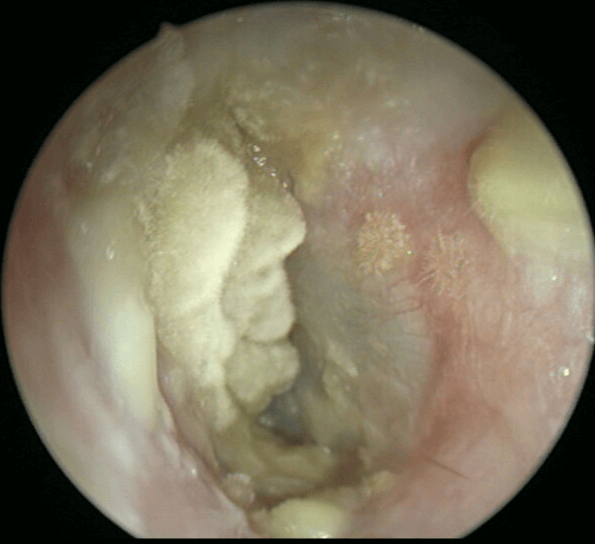
What is otomycosis?
Otomycosis is the medical name for fungus infection of the ear.
Fungus is a common cause of ear infections in Singapore because of the tropical humid climate.
Usually, these infections involve the external ear canal and cause symptoms like itching, ear discharge, blocked hearing, and pain.
However, they can cause more serious problems like eroding the ear drum, resulting in perforation of the ear drum.
Very rarely, infection can spread to the skull and become life-threatening. This situation is extremely uncommon and happens predominantly in immunosuppressed patients.
Do I have otomycosis?
Fungal infections have similar symptoms to other causes of ear inflammation. Hence, it is not possible to distinguish otomycosis and other causes of ear inflammation from symptoms alone.
Instead, we make the diagnosis by examining the ear with a microscope and sometimes using laboratory tests.
Microscopic ear examination may reveal the presence of fungal spores which confirms the diagnosis of otomycosis.

However, if we can’t see fungal spores, then it can be difficult to distinguish fungal from bacterial infection. When there is doubt, sending a sample from the ear to the laboratory can confirm the diagnosis. We obtain the sample by taking a swab of the ear.
How do you treat fungal ear infection?
Micro-suction
We need to clear as much fungus from the ear canal as possible without injuring the skin and eardrum. The safest and most thorough way to achieve this is by micro-suction. This method uses a miniature vacuum device to clean the ear and a microscope to view the ear clearly.
Anti-fungal creams
I find that microscope-directed application of anti-fungal cream after cleaning the ear is very effective at treating otomycosis. The cream is applied meticulously to the skin and affected parts of the eardrum using a delivery needle. This procedure is safe and painless. I perform the application once and may repeat this after a week or two, depending on the response. The patient does not usually need to do anything in between
The cream contains an anti-fungal agent (Clotrimazole) combined with antibiotic and steroid. Hence, if bacteria is present, this will also be treated. Furthermore, the steroid helps reduce inflammation in the ear.
Anti-fungal drops
Anti-fungal drops are an alternative to cream but have two disadvantages: Firstly, patients have to keep applying them, compared to the convenience of a single application of cream. Secondly, they can sting, particularly if there is already a hole in the eardrum.
Anti-fungal tablets
We sometimes prescribe anti-fungal tablets if the infection is not responding to treatment or for more severe infection. For example if the fungus is eroding the ear drum.
Intravenous anti-fungal agents
We rarely need to use intra-venous antifungals. However they are sometimes required for severe infection. For example if fungus is invading the bone of the skull. Treatment in these situations is usually in consultation with an infectious disease specialist.
How do I prevent future fungal ear infections
You can prevent fungal infections by not putting any objects in your ear that could traumatise the skin and introduce infection, and by reducing fungus in your surroundings.
Common objects that introduce infection are cotton buds, earphones and fingers! Cotton buds, ear phones and fingers can all abrade the skin of the ear canal, especially when it is wet. For example, after bathing or swimming. Even mild trauma breaks the protective layer of the skin, making it easier for infection to set in.
Likewise, putting a contaminated object in your ear is a recipe for introducing infection! Cleaning our earphones regularly and washing our hands carefully when using them goes a long way to preventing ear infection. Alternatively, replace your earphones with headphones or even open-ear design headphones.
Finally, fungal infections originate from the environment. Check your home furnishings and air-conditioners to make sure they are not contributing to the problem.
Can I make a appointment to treat my ear infection
Please contact us at Advanced ENT Centre if you would like to make an appointment.